


Your water heater works hard every day to provide hot showers, clean dishes, and warm laundry. However, over time, sediment and mineral buildup can accumulate within the tank, compromising its efficiency and reducing its lifespan. The good news? With a little maintenance, you can keep your system running smoothly for years to come. This guide will walk you through how to flush a water heater, why it’s important, and when to call the pros at High 5.
Why Flushing Your Water Heater Is Important
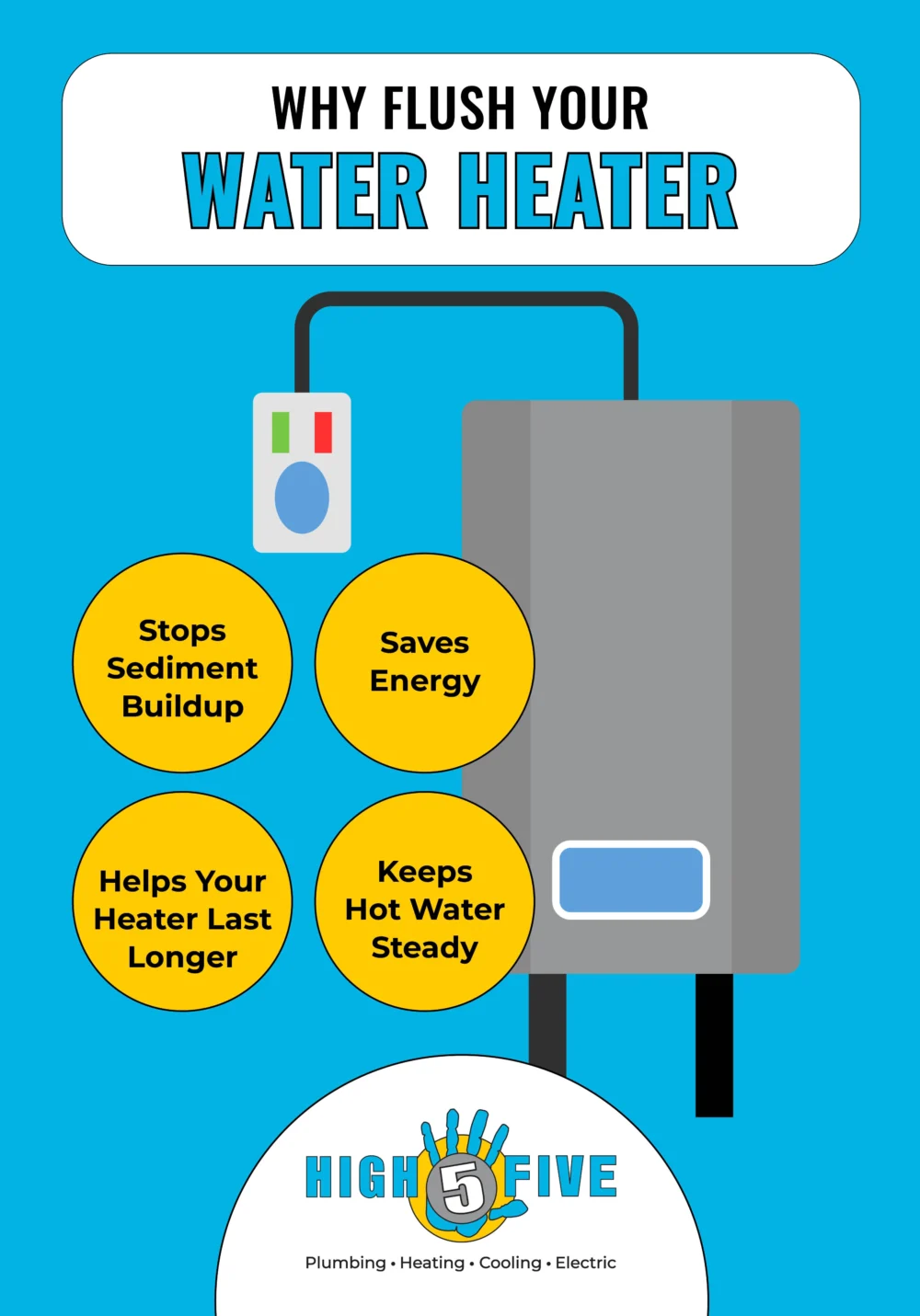
Regular maintenance of your water heater, including flushing, is essential for a healthy, efficient system. Here’s why it matters:
Prevents sediment buildup
Water naturally carries minerals like calcium and magnesium, especially in areas with hard water. Over time, these minerals settle at the bottom of the water heater tank. If you don’t flush water heater tanks periodically, this sediment can create a hard layer that reduces heating efficiency and increases the risk of corrosion.
Improves energy efficiency
Sediment acts as a barrier between the heating element and the water, forcing the heater to work harder to deliver hot water. This not only wastes energy but also raises your utility bills. Flushing a water heater helps maintain optimal energy efficiency by removing this insulating layer of debris.
Extends the lifespan of the heater
The added strain on your water heater from sediment buildup can lead to premature wear and tear. Flushing helps keep internal components, such as the heating element and tank lining, in better condition, ultimately extending the system’s lifespan.
Ensures consistently hot water
Have you noticed your hot water running out faster than usual? Sediment can reduce the tank’s capacity and impair performance. By flushing the system, you help restore full capacity and consistent hot water output throughout your home.
Tools and Materials Needed
Before you begin, gather the following tools and materials:
- Garden hose (long enough to reach a drain or outdoors)
- Bucket (optional, for draining)
- Adjustable wrench or pliers
- Towel or rags (for cleanup)
- Safety gloves
- Screwdriver (if needed for panel access)
Safety Precautions Before You Begin
Working with water heaters involves high temperatures, electricity, and gas — so safety comes first. Follow these steps before beginning:
- Step one: Turn off the power supply. Set gas heaters to “Pilot” mode or shut off power at the breaker for electric models to prevent damage during flushing.
- Step two: Turn off the cold water supply. Close the cold water inlet valve at the top of the tank to stop more water from entering.
- Step three: Allow the tank to cool. Let the tank sit for at least an hour to avoid burns from hot water.
How to Flush Your Water Heater: Step-by-Step Guide
Once the tank has cooled and power is safely off, follow these steps to flush your water heater effectively. High 5 has also created a YouTube tutorial video.
Step one: Open a hot water faucet in your home, like a sink or tub. This relieves pressure in the system and helps prevent a vacuum from forming during the draining process.
Step two: Locate the drain valve near the bottom of the water heater. Attach your garden hose to the valve, ensuring a tight fit. Run the other end of the hose to a floor drain, sump pit, or suitable outdoor area where hot water won’t cause damage.
Step three: Open the drain valve carefully to begin draining the water. You may need a screwdriver or wrench to open it. Allow the tank to fully empty. This will flush out much of the sediment that has settled at the bottom.
Step four: Once the tank is mostly empty, briefly turn the cold water supply back on with the drain valve still open. This helps flush out any remaining sediment. Let the water flow until it runs clear from the hose.
Step five: Close the drain valve securely and remove the garden hose. Turn the cold water supply back on fully to refill the tank. Keep the hot water faucet open until a steady stream of water flows from it, signaling that the tank is full and air has been purged from the system.
Step six: Restore power and test the system. For electric heaters: Flip the breaker switch back on. For gas heaters: Turn the thermostat back from “Pilot” to your desired temperature setting.
Monitor the system for proper heating and check the drain valve for any leaks. Congratulations — you’ve successfully flushed your water heater!
Maintenance Tips for Long-Term Efficiency
Flushing alone won’t guarantee your water heater lasts forever. Implement these additional maintenance tips to keep your system in top shape.
Flush your water heater annually
Most experts recommend flushing once a year, but homes with hard water might benefit from more frequent maintenance, like every six months.
Install a water softener for hard water areas
Hard water accelerates mineral buildup. A water softener system can reduce this effect, making annual flushing even more effective.
Inspect the anode rod regularly
The anode rod helps prevent tank corrosion. Have a professional inspect it every 1–2 years and replace it if it’s significantly corroded. Powered anode rods could also serve as an alternative to traditional ones.
Monitor temperature settings
Setting your water heater to around 120°F strikes a balance between energy efficiency and safety, helping to minimize mineral buildup.
Check for leaks and strange noises
Unusual sounds like popping or banging indicate sediment buildup. Also, check around the base of the heater for moisture, which could signal leaks or corrosion.
The Denver Water website also offers some tips for addressing sediment buildup and issues with dirty water.
Still Having Issues With Your Water Heater? Call the Plumbers at High 5
Even with regular maintenance, some water heaters may develop issues that require professional attention. If you’re still experiencing inconsistent hot water, strange noises, or leaks after flushing, don’t hesitate to call the experts at High 5.
Our licensed plumbers are experienced in diagnosing water heater problems, performing repairs, and recommending replacement units when necessary within the Greater Denver Metro area. Whether it’s sediment buildup, failing components, or efficiency concerns, we’ll help you restore comfort and reliability to your home’s hot water system.
Frequently Asked Questions
What happens if I don’t flush my water heater?
Skipping regular flushing can lead to significant sediment accumulation, reducing energy efficiency, damaging internal components, shortening the unit’s lifespan, and causing noisy operation or inconsistent water temperatures.
Can I flush my water heater on my own, or should I hire a professional?
Many homeowners can safely flush their water heaters by following proper precautions. However, if you’re uncomfortable performing the steps or if your system shows signs of significant sediment buildup, leaks, or malfunctions, it’s best to hire a professional plumber.
How long does it take to flush a water heater?
Flushing a water heater typically takes 30 to 60 minutes, depending on the size of the tank and the amount of sediment buildup within it. Larger tanks or severely clogged systems may take longer.
Is it safe to flush a water heater during winter?
Yes, you can flush your water heater during winter, but take extra care to prevent pipes from freezing, especially if the drain hose is routed outdoors.