


Preventing excessive sediment in your water heater is an essential part of good preventive maintenance, whether you live in Denver, Littleton, Golden, or the surrounding areas. When this material builds up inside your water heater, it can cause a range of issues. Recognizing some of the most common signs of sediment buildup in your water heater is key to preventing serious damage or even a possible emergency. The team at High 5 Plumbing, Heating, Cooling & Electric has compiled a list of the most common signs of sediment buildup to look for, how it impacts your water heater, and how to prevent it from affecting this vital appliance in the first place.
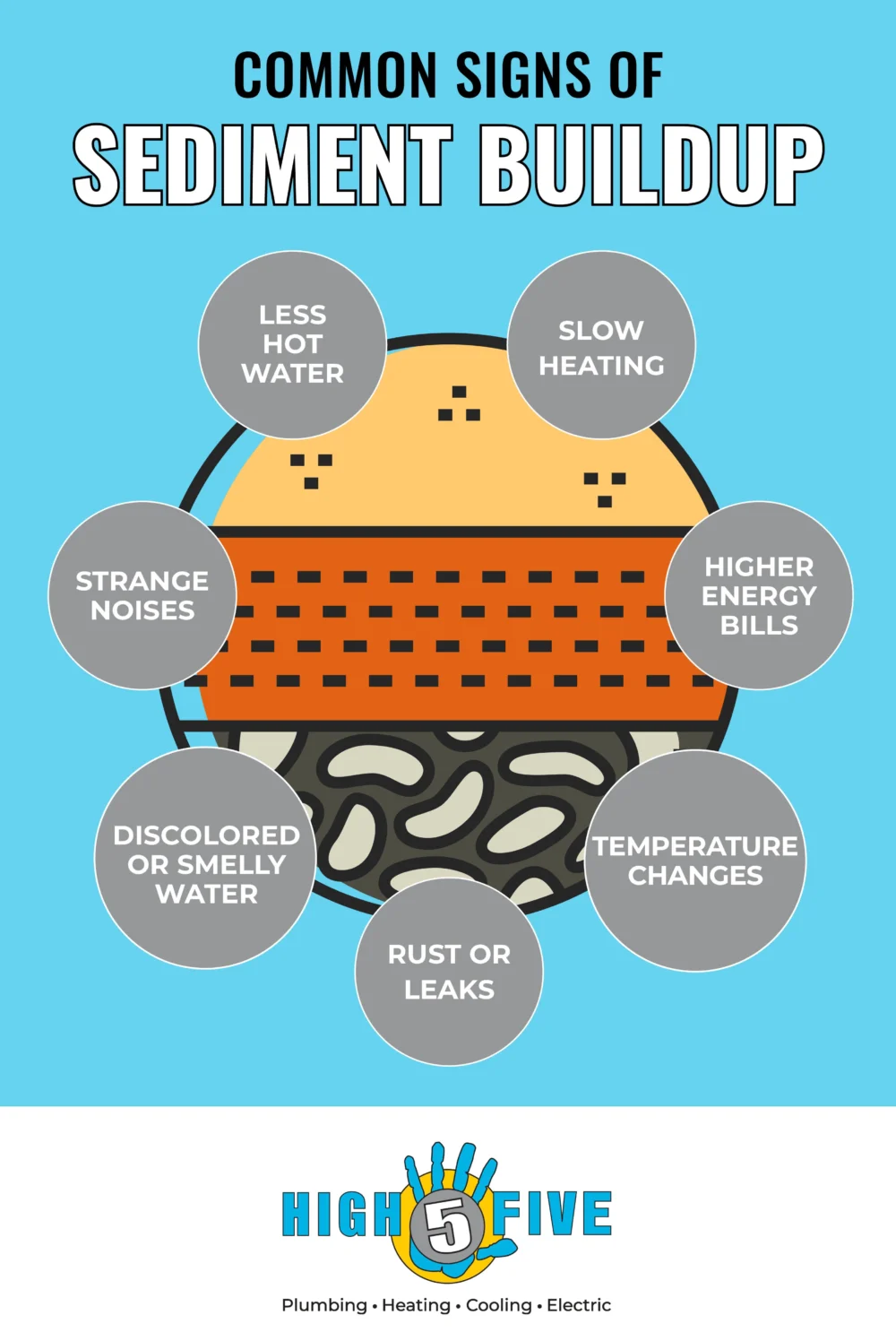
Common Signs of Sediment Buildup
So what does water heater sediment look like? It usually appears as a sandy or gritty substance varying in size and color, but you won’t see it until you flush your water heater. That’s why recognizing the signs of sediment buildup is so important. If you notice or experience any of these signs, you may have excess sediment buildup in your water heater.
1. Unusual noises coming from the water heater
Odd noises, such as popping, hissing, or banging, from your water heater may indicate excess sediment buildup. This occurs when water inside the tank is trapped under a layer of sediment, creating strange noises as the water heats up and is forced out from underneath the buildup.
2. Reduced hot water supply
As sediment starts to accumulate at the bottom of your tank, it occupies the space reserved for the water. This causes your water heater to work harder, resulting in a reduction of hot water supply (or, those long, hot showers you normally enjoy are suddenly cut short due to less hot water).
3. Fluctuating water temperature
Sediment acts as an insulator, forcing the heating element inside your water heater to work harder just to maintain a consistently hot water temperature. If you notice that the water temperature in your home is suddenly fluctuating from cold and lukewarm to hot and back again, it may be due to excess sediment buildup.
4. Increased energy bills
When too much sediment forces your water heater to work harder, it must use more energy to meet household demand. As this happens, you may notice that your monthly energy bills are much higher than normal, even without a change in usage. This could be because there’s too much sediment, which causes the water heater to run more frequently than it normally would just to maintain a hot water temperature.
5. Discolored water or strange smell
Excess sediment may create an environment where bacteria thrive, resulting in discolored or strange-smelling water. If you notice an unpleasant, rotten egg-like odor when you turn the water on, it may be due to sediment buildup. Discoloration is typically caused by rust and corrosion in the tank due to too much sediment.
6. Longer heating times
Not only does excess sediment lead to increased energy usage and a reduced hot water supply, but it may also result in longer heating times. Many homes in the Denver area have hard water, which can result in excess sediment. If you notice that it’s taking much longer than normal to heat the water in your home, it could be because there’s too much sediment lurking in your tank.
7. Leaks or visible rust
Not all water heater leaks are due to sediment buildup. However, if your water heater is leaking and you see visible signs of rust around the unit, there’s a good chance that sediment buildup is the culprit. Too much sediment sitting inside the tank for a prolonged period will eventually corrode the inside, creating rust and leaks.
How Sediment Buildup Impacts Your Water Heater
Excess sediment buildup can significantly impact your water heater in several ways, particularly if you fail to address the issue once it is recognized.
- Too much sediment can trap water as it tries to escape, expanding and contracting during heating, creating strange popping or hissing noises.
- Excess sediment buildup may cause your water heater to burst, resulting in a shorter lifespan than you might have expected.
- Failing to address sediment buildup may result in higher energy bills, longer heating times, and a reduction in hot water supply.
- You may notice a problem with your water quality, including unpleasant odors or unusual discoloration.
- Some manufacturers require regular water heater flushes and refills to keep their warranty valid.
Prevention and Maintenance Tips
Fortunately, there are several steps you can take to prevent sediment buildup and proactively maintain your water heater, thereby avoiding serious issues and costly repairs. Follow these tips to help you keep your water heater clean and sediment-free:
- Conduct regular tank flushing: Ideally, flush your water heater tank once a year, or if you have hard water, flush it every six months for optimal results.
- Install a water softener: A whole-house water softener is a smart way to treat hard water and remove excess sediment, which may help to extend the lifespan of your water heater in the process.
- Schedule professional inspections: Have your water heater inspected by professionals like the High 5 team to look for issues early before they turn into costly breakdowns or a major water leak later.
- Monitor for sediment signs: Keep a close eye on your water heater’s performance, and monitor it regularly to look for the signs of sediment buildup mentioned above.
Experiencing Sediment Issues? Schedule Water Heater Maintenance With The Plumbers at High 5
High 5 Plumbing, Heating, Cooling & Electric offers comprehensive, expert plumbing services that focus on what’s needed and the most effective way to do the job. True to our core values, our plumbing company is transparent about pricing, and our rates are competitive and affordable. We work hard to earn the trust and satisfaction of our customers in the Denver area. If you’d like to learn more or want to schedule water heater maintenance, contact High 5 today!